
The automobile industry is one of the most important industries in India. Millions of vehicles are manufactured and sold every year, including cars, motorcycles, commercial vehicles, electric vehicles, and auto components.
With such a large number of vehicles on the road, quality and safety are extremely important. A small defect in an automobile component can affect vehicle performance and, in some cases, passenger safety. This is where standards and certification play an important role.
The Bureau of Indian Standards (BIS) develops Indian Standards and operates certification schemes for products that need to meet specified quality and safety requirements. While BIS certification is generally voluntary, the government makes certification compulsory for certain products through Quality Control Orders (QCOs).
For automobile manufacturers and component suppliers, compliance with applicable Indian Standards can improve product quality, build customer confidence, and support a more reliable supply chain.
What Is BIS Certification?
BIS Certification is a process through which a product is assessed against a relevant Indian Standard. Depending on the applicable certification scheme and product, manufacturers may be required to meet specific requirements for manufacturing, testing, quality control, and process management.
BIS states that manufacturers applying for product certification should have suitable manufacturing infrastructure, process controls, quality control systems, and testing capabilities. BIS may also assess the manufacturing premises and verify product conformity through testing.
For products covered under Scheme-I, the ISI Mark is used as the BIS Standard Mark. Other BIS schemes use different conformity or registration marks.
Why Is BIS Certification Important for the Automobile Industry?
Automobiles contain hundreds or even thousands of individual components. Tyres, tubes, wheels, safety-related components, electrical equipment, lighting products, and other parts need to perform reliably.
BIS standards help manufacturers maintain consistent requirements for products covered by those standards.
For example, BIS's compulsory certification list includes standards for automotive pneumatic tyres and tubes, including tyres for passenger cars, commercial vehicles, and two- and three-wheeled motor vehicles.
Here are some major ways BIS certification strengthens the automobile industry.
1. Improves Product Safety
Safety is the first priority in the automobile sector.
Poor-quality components can increase the risk of breakdowns and accidents. Applicable BIS standards establish technical requirements that manufacturers must meet for covered products.
For example, tyres and tubes are critical components because they directly affect vehicle control, braking, and road grip. Following applicable standards helps manufacturers maintain consistent quality.
2. Builds Customer Confidence
Customers want to know that the products they purchase are reliable.
A recognised BIS Standard Mark, where applicable, gives customers an additional indication that the product has been assessed against the relevant Indian Standard.
This can help manufacturers build trust and create a stronger reputation in the market.
3. Supports Consistent Product Quality
Automobile manufacturers need consistent quality across large production volumes.
BIS certification requires manufacturers to establish appropriate production controls and testing capabilities. This encourages businesses to follow a structured quality process instead of depending only on final-product inspection.
Better process control can reduce:
Manufacturing defects
Product failures
Customer complaints
Rejection of components
Quality-related production losses
4. Helps Manufacturers Meet Regulatory Requirements
Not every automobile product automatically requires BIS certification. However, certain products are covered by government notifications and Quality Control Orders.
When a product falls under compulsory BIS certification, manufacturers, importers, distributors, and other businesses must comply with the applicable requirements.
BIS explains that products covered by compulsory certification may require the Standard Mark under a valid BIS licence or other applicable conformity assessment mechanism.
Therefore, manufacturers should check the latest applicable QCO and Indian Standard before launching or importing a product.
5. Strengthens the Automotive Supply Chain
Automobile companies depend on a large network of component manufacturers and suppliers.
If suppliers maintain proper quality standards, vehicle manufacturers can receive more consistent components. This can improve:
Supplier reliability
Production efficiency
Quality control
Product consistency
Customer satisfaction
BIS certification can therefore contribute to a stronger quality culture throughout the automotive supply chain.
6. Supports the Indian Manufacturing Sector
India has a growing automobile and auto-component manufacturing sector.
Following Indian Standards can help manufacturers develop products according to recognised national requirements. This is particularly useful for businesses that want to establish themselves as reliable suppliers.
BIS also provides certification mechanisms for foreign manufacturers for applicable products, allowing eligible overseas manufacturers to obtain a BIS licence for products conforming to Indian Standards.
7. Helps Reduce Quality-Related Business Risks
Manufacturing defective automobile components can result in product returns, customer complaints, recalls, and damage to a company's reputation.
A proper quality and testing system helps businesses identify problems earlier.
BIS certification does not eliminate every possible product risk, but it provides a structured conformity assessment framework for products covered by the relevant standards.
8. Supports Electric Vehicle and Automotive Electronics Ecosystems
The automobile industry is rapidly moving towards electric and connected vehicles.
Modern vehicles use batteries, electronic controls, displays, chargers, communication systems, sensors, and other electronic products.
However, businesses should not assume that every automotive electronic product automatically falls under BIS CRS. The Compulsory Registration Scheme applies to notified Electronics and IT product categories. BIS maintains the current list of products covered under Scheme-II.
Therefore, manufacturers should identify the exact product category and applicable standard before choosing the certification route.
BIS Certification and Automobile Components
Automobile businesses should identify the exact Indian Standard applicable to their product.
Some automotive-related products appear under BIS's compulsory certification framework. For example, BIS lists standards covering:
Automotive vehicle tubes
Tyres for two- and three-wheeled vehicles
Passenger car tyres
Commercial vehicle tyres
LPG containers for automotive use
Certain automotive-related components and equipment
The exact requirement depends on the product, applicable Indian Standard, and current government notification.
How to Apply for BIS Certification Online?
Businesses searching for BIS Certification Online should first identify the correct Indian Standard for their product.
The general process includes:
Step 1: Identify the Applicable Indian Standard
Find the Indian Standard applicable to the automobile product or component.
Step 2: Check Whether Certification Is Mandatory
Check the latest BIS compulsory certification list and applicable QCO to determine whether certification is mandatory.
Step 3: Review Product Requirements
Understand the technical specifications, manufacturing requirements, testing requirements, and quality control requirements.
Step 4: Arrange Testing
Product testing may be required through a BIS-recognised or otherwise applicable laboratory, depending on the certification procedure.
Step 5: Prepare Manufacturing Documents
The manufacturer should maintain appropriate documents relating to manufacturing facilities, quality control, testing, machinery, processes, and other requirements.
Step 6: Submit the Application
BIS accepts product certification applications online through its Manakonline portal.
Step 7: Inspection and Assessment
BIS may assess the manufacturing facility and verify manufacturing and testing capabilities.
Step 8: Obtain the Applicable Certification
Once the requirements are successfully met, BIS grants the applicable licence or registration according to the relevant conformity assessment scheme.
What About BIS CRS Registration Online?
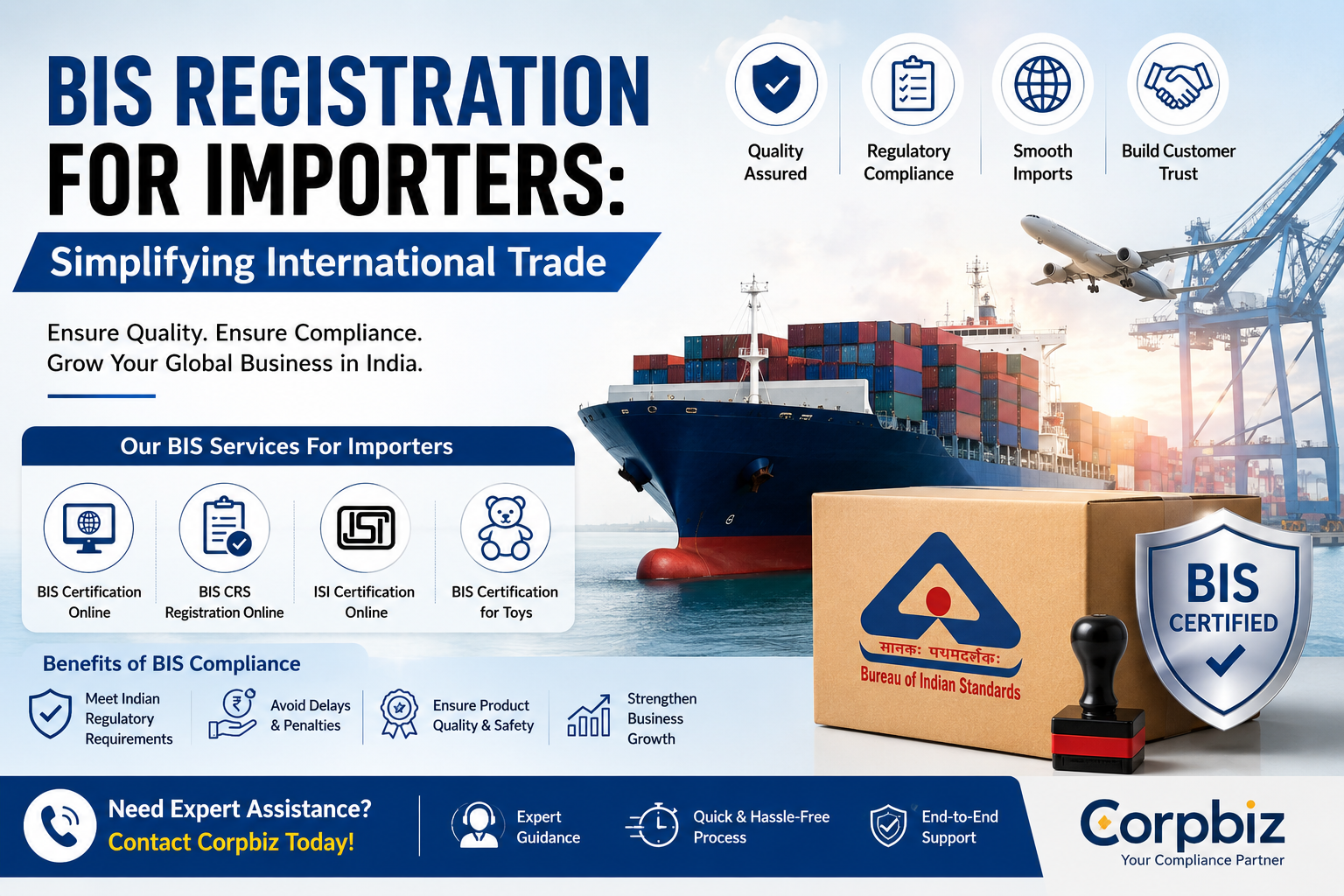
BIS CRS registration Online is different from the traditional ISI Mark certification process.
CRS, or the Compulsory Registration Scheme, is primarily used for notified Electronics and IT products under Scheme-II. BIS states that the scheme is based on self-declaration of conformity for products covered by the applicable notification.
Therefore, an automobile manufacturer should not apply for CRS simply because a vehicle contains electronic components.
The exact product must first be checked against the current CRS product list.
What Is ISI Certification Online?
The phrase ISI Certification Online generally refers to applying online for BIS product certification under the scheme that permits the use of the ISI Mark.
BIS confirms that applications for product certification are accepted online, including payments.
For automobile businesses, the key point is to identify whether the particular product is covered under Scheme-I and whether an applicable QCO makes certification compulsory.
Is BIS Certification for Toys Related to the Automobile Industry?
At first, BIS Certification for Toys may seem unrelated to automobiles. However, it is useful to understand that BIS requirements are product-specific.
Toys are covered under their own applicable Indian Standards and certification requirements. BIS also provides specific guidance for toy certification.
Similarly, automobile products must be assessed against their own applicable standards.
This means a company should never assume that one BIS licence automatically covers all products manufactured by the business.
Common Mistakes Automobile Manufacturers Should Avoid
1. Applying for the Wrong Certification Scheme
ISI certification, CRS registration, and other BIS conformity assessment schemes are not interchangeable.
2. Ignoring Product-Specific Standards
Every product should be checked against its applicable Indian Standard.
3. Assuming BIS Certification Is Always Mandatory
BIS certification is generally voluntary unless the government makes compliance compulsory for a product through the applicable legal framework.
4. Using the BIS Mark Without Proper Approval
Manufacturers should use the applicable BIS Standard Mark only according to the terms of the granted licence or registration.
5. Ignoring Changes in Regulations
QCOs and applicable standards can be updated. Businesses should regularly check official BIS notifications and requirements.
How Corpbiz Can Help With BIS Certification
Corpbiz helps manufacturers, importers, and businesses understand applicable regulatory requirements and manage the BIS certification process.
Our experts can assist with:
Identifying the applicable Indian Standard
Understanding BIS certification requirements
Preparing documentation
Testing coordination
Online application support
Factory inspection preparation
BIS licence-related assistance
Compliance support
Before applying, businesses should confirm the latest requirements applicable to their specific product.
Conclusion
BIS certification can play an important role in strengthening India's automobile industry by supporting product quality, safety, consistency, and regulatory compliance.
For products covered by compulsory certification, obtaining the required BIS approval is also an important legal requirement. For other products, businesses can assess whether voluntary certification provides commercial or quality benefits.
From tyres and tubes to other automotive components, manufacturers should identify the correct Indian Standard and certification scheme before starting the application.
Whether you are researching BIS Certification Online, BIS CRS registration Online, ISI Certification Online, or even BIS Certification for Toys, remember that the correct certification route depends on the specific product and applicable Indian regulations.
Frequently Asked Questions
1. Is BIS certification mandatory for automobile products?
Not for every automobile product. BIS certification is generally voluntary, but the government makes certification compulsory for certain products through Quality Control Orders and other legal requirements.
2. Does BIS certification improve automobile product quality?
Yes. The BIS certification process requires applicable manufacturers to meet relevant Indian Standards and maintain appropriate manufacturing, quality control, and testing capabilities.
3. Can automobile manufacturers apply for BIS Certification Online?
Yes. BIS accepts product certification applications online through its Manakonline portal.
4. Is BIS CRS registration Online applicable to all automobile electronics?
No. CRS applies to notified Electronics and IT product categories. Businesses should check the current BIS CRS list before applying.
5. What is the difference between ISI certification and CRS registration?
ISI Mark certification is generally associated with BIS Scheme-I, while CRS is Scheme-II and applies to notified products under the Compulsory Registration Scheme.
6. Is BIS Certification for Toys the same as automobile certification?
No. Toys and automobile products are subject to their respective applicable standards and certification requirements.
7. Does BIS certification apply to imported automobile products?
It can, where the relevant product is covered by a compulsory BIS requirement. Foreign manufacturers may also use the applicable BIS certification mechanism, including FMCS for eligible products.
8. How does BIS certification benefit automobile manufacturers?
It can help manufacturers demonstrate conformity with applicable Indian Standards, improve quality controls, strengthen customer confidence, and meet mandatory regulatory requirements where applicable.
About Corpbiz
Corpbiz is a professional business compliance and regulatory services platform helping businesses with registrations, licences, certifications, and ongoing compliance requirements.
Our team assists businesses with regulatory processes and documentation so that entrepreneurs can focus on running and growing their businesses.
Author Profile
Author: Atul Shukla
Profile: Legal & Compliance Content Specialist
Atul Shukla writes about Indian business laws, regulatory compliance, certifications, registrations, and government approval processes. His content focuses on explaining complex compliance topics in simple and practical language for entrepreneurs, manufacturers, startups, and business owners.


Write a comment ...